Tuesday, April 15, 2014

With Great Change Should Come Great Planning


U.S. strategists have refocused a majority of our nation’s attention onto the happenings within the Pacific region. As a rising global economic heartland, China and the surrounding countries receive a significant portion of attention. By adding in potential national security threats, it leaves America with only one logical response, ever rising interest.

C-2A Aircraft
Given the nature of the area, the United States has seen fit for the Navy and Marine Corps to take the brunt of traffic within the region. Their use of floating sea bases highlights the need for mobility and flexibility within the Pacific environment, but do these abilities come at a cost? One can imagine that supplying not only an increasing number of people in the Pacific, but individuals out at sea and potentially in changing locations. The military logistics necessary for such an operation is extensive.


For the past fifty years, the United States Navy has been utilizing the C-2A Greyhound. This propeller driven airframe is capable to land on and take off from an aircraft carrier, and does so often to distribute supplies executing their mission of carrier onboard delivery. From a single aircraft carrier, the planes are able to hit smaller warships and shore bases to transfer and deliver supplies.

Unfortunately, the fleet of C-2A’s are reaching their end of their lifetime within the next decade. There is potential to renovate the planes with new wings and engines to extend their lifetime to beyond 2040, but the Navy has recently considered procuring the V-22 Osprey as a replacement aircraft to accomplish the mission.
Benefits of switching to the Osprey are significant and include the versatility to land on almost any ship in the Navy with their vertical launch capability, increased range, and increased cargo space. The versatility of the Osprey to accomplish other types of missions also increases its attraction as the fiscal situation continues to worsen.

However, what would the effect be on the logistical situation within the Pacific. Utilizing the GTSR concept, the changes will be quite significant. The need to first procure and build an entire fleet of Ospreys may be too large of an undertaking for the Navy now. Add in the need for properly trained pilots and maintenance crews, which will require serious time investments, and the likelihood drops even more. Different transportation networks will need to be evaluated and developed not only for the actual missions of the Osprey, but also for needs such as sending out spare parts in order to fix the aircrafts. The needs for sustaining the Osprey will be drastically different as a newer aircraft, as well as a more complex one. The sustainment of the C-2A’s has been proven repeatedly to be possible given their long term of service. Will the Osprey be able to perform as well?

Adding to the GTSR needs of the new aircraft is the concept of a logistical snowball. Clear examinations will be necessary to determine potential consequences of procuring the new aircraft. Buying the V-22’s will bring more individuals as pilots and maintenance men, greater need for training, a new repair parts distribution system, and other potential needs. This may create an even greater logistical need than what is currently being faced.

Will the efficiency and versatility of the Osprey be enough to attract the navy during times of fiscal scarcity?

Tuesday, April 1, 2014

Knock Knock, China...It's 'Murica

Following World War II, The United States left the Philippines in order to give back the nation that had been hosting them for the Pacific Theater of Operations (PTO). With Japan defeated and the Cold War looming on the footsteps for the Americans, it was a better decision to pull back and establish our  military forces somewhere else. Years later, the United States Government, along with the Department of Defense, is planning to push large numbers of troops back to some of the bases within the Philippines, which have not been occupied in approximately 20 years. Their purpose? Among other reasons, these forces are being sent in order to retain close proximity to the mighty powerhouse that is China.


Sierra Madre Ship in Second Thomas Shoal
Washington's move came through agreement with the Philippine government on March 14th and was a major production in accordance with the pivot in the Asia-Pacific Region. Recently, China has had disputes with Manila (part of the Philippines) and instead of simply allowing possibly violent acts to continue, they are arming themselves with allies that could potentially deter any further Chinese violence. The dispute between the two nations currently resides over a scuttled ship in the Second Thomas Shoals. This all began when a Philippine ship entered the South China Sea (where this boat has been stranded for 20 years) and attempted to board and resupply it. Government officials within the two nations are having trouble coming to an agreement on whether or not it was a breach of territory.

So, where does this leave the United States? Is this something that we want to delve into? What pro's and con's erupt from possibly redeploying troops to some of the bases within the Philippine Islands?

Clark Air Base, 1989
 
Strategically, Washington completely accepts and plans on taking advantage of this opportunity to increase American Influence within the Asia-Pacific Area. The pivot-hold that can be gained in the Philippines is incredibly important to American interest and also gives support to the Philippines with respect to their own nation's sovereignty against possible outside threats. In the G-T-S-R model, all four components are increased for the United States. By occupying key areas on the Philippine archipelago such as:  Manila, Clark, Palawan, Cebu, Nueva Ecija, and La Union, the ability for generation of force will be greatly magnified. Transportation within the region will require a large naval force and will need to be supported by control of surrounding waters. The United States retrieval of Subic Bay, a naval base established in WWII, will allow for a great naval foothold where supplies can be shipped in and out of. The sustainment and redeployment efforts will also receive much appreciation just because of how centrally located the Philippines are within the Indian Ocean and other notable seas nearby.
Subic Bay - Philippine Islands

The bottom line is simple. The United States is supporting one of its allies by re-allocating forces in order to support an overall good. In doing that, they are also expanding their national power by regaining land that outstretches common U.S. boundaries. The position in the Asia-Pacific region will require some initial work in order to get all of the necessary supplies where they are needed but after this initial "push" of supplies the region will be able to supply, sustain and continue to redeploy. With the support of the Philippine government, the United States can avoid having any growing pains such as they did during Vietnam when they had to deal with a foreign nation who was in fact very apprehensive in the U.S. utilization of their port in Saigon. Cooperation is crucial to the success of this foreign "base," for the Americans.

Looking to the future, the innovation of establishing a base that can operate in foreign waters gives great power to the United States. However, this power could be conceived as problematic when it comes to foreign relations with China. How will China respond to the U.S. involvement? How long will the United States remain in the Philippines? These questions will be answered in the coming weeks and months when further planning is established and when initial movement is enacted. We will look to see the reaction of China and other surrounding countries as these events unfold.


Friday, March 28, 2014

Pic of the Week - The Northern Distribution Network

The Northern Distribution Network and the PAKGLOC
 
A product of improvisation by intrepid logisticians, the Northern Distribution Network proved to be a vital alternative to the Pakistan Ground Line of Communication.  The recent developments in Crimea, however, show how this project may turn out to be a critical chip in the new "Great Game."
 
Want to read more??
 
 
"Nothing is Simple in Afghanistan" - Andrew Betson

Tuesday, March 4, 2014

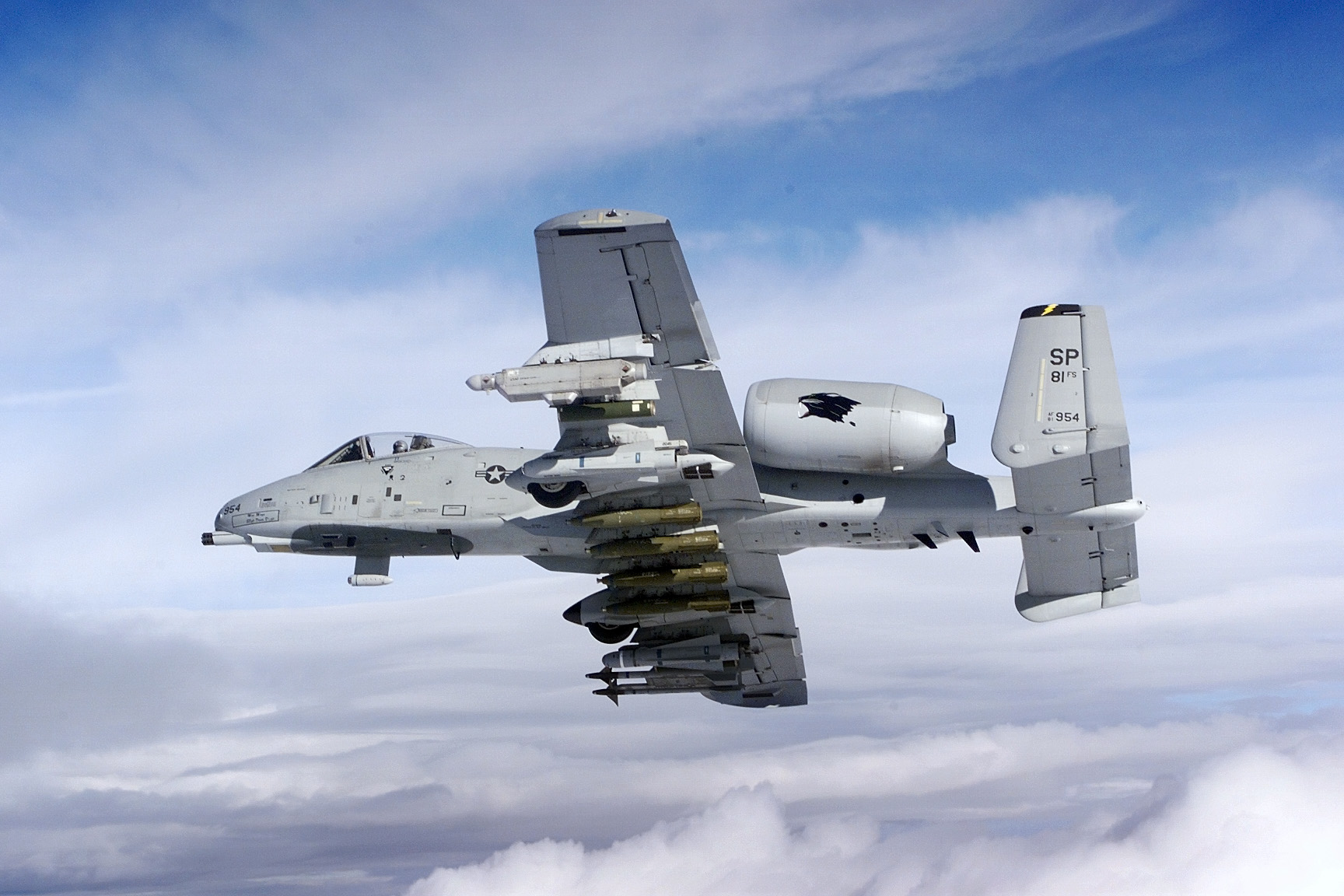
The U.S. Army's Role in the Fate of the A-10

The A-10 Warthog is a unique and specialized close air support (CAS) aircraft that the Air Force has fielded and maintained since the late 70's.  The effective and devastating CAS the A-10 provides to troops on the ground has earned it a spot near and dear to the heart of many soldiers on the ground. Due to steep budget cuts afflicting the DOD, the necessity of this capability, as well as the effectiveness of other aircraft to fulfill the same mission is currently in open debate and could easily produce a books worth of commentary.

Rather than dive down that rabbit hole, the purpose of this post is to explore the interesting, if impractical, possibility of the Army procuring the Air Force's 300+ A-10's should they decide to retire them. When this potential is approached using the four stages of logistics (GTSR), the Army only has to seriously consider two of the four aspects should they take control of the A-10.

Generation:
The fleet of A-10's is already produced, the Air Force keeps repair and replacement parts on hand, and the munitions production is already in full swing. Many Army posts are already joint based with the Air Force, and others are home to aviation units that already have airstrips that can handle an A-10. The real issue comes from the generation of soldiers to support the A-10. The troops needed to operate and maintain them are already trained and working in the Air Force. If the Air Force decides not to transfer its Airmen into the Army, a foolish decision considering the looming troop cuts, the mechanics of the A-10 are not drastically dissimilar from that of the Apache, Black Hawk, or Chinook, and enlisted AIT could easily be tweaked to include the new platform. However, this is only a short term fix. In the long run, a new MOS AIT (or several) will need to be created, and the Army will need to develop it's own flight school for the A-10. Not a monumental undertaking, but a serious consideration, especially with a tight budget.

Transportation:
The Air Force already transports the Army's helicopters, and it's own A-10s, and the Army is already set up logistically to support CAS helicopters. Little if any change is needed in the realm of transportation.

Sustainment:
This is the area where the Army would need to focus if they were serious about taking over the A-10 platform. With budget cuts coming in fast, can the Army afford to take on another weapons system, MOS, flight school, and all of the new munitions the A-10 typically carries? The ordinance corps will need to expand its capability to support a new platform, and all of the new inventory items that entails. Air strips will need to be maintained, especially with the added wear and tear that jet aircraft put on them. For the Army, the sustainment of this new asset would be a serious consideration.

Redeployment:
This would be another minor factor in the Army's ability to adopt the A-10. Redeployment would be handled much in the same way that Apache units are, with the Air Force's help.

Overall, the Army would need to weigh the benefits the A-10 brings to the table with the added costs associated with introducing any new asset. Currently the Air Force has decided to maintain possession of the A-10, but should they ever decide to get rid of them, the Army is not far from being able to effectively integrate the A-10 into its logistical infrastructure.

Keeping Soldiers Safe Without Sacrificing Security

The Marine Corps has been testing a new semi-autonomous system that, although not yet combat effective, was used in an air base scenario in late January during the Marines' Integrated Training Exercise to successfully maintain the security of the area.  According to this article by the Military Times, the Mobile Detection Assessment Response System (MDARS) could soon be heading to Afghanistan.


Cpl. D. J. Wu / Marine Corps
 MDARS "patrols" the airfield by either roaming or by heading to predetermined locations as the guards operate from onlooking towers.  If a guard detects activity from beyond the perimeter, he can push a button and MDARS will go straight there to investigate further until a quick reaction force can pick up the threat.  This vehicle was developed under sponsorship of the Army's Product Manager Force Protection Systems at Fort Belvoir, VA and features various advanced sensors, like navigation lasers, daylight and infrared cameras, a radar that can detect an object nearly a mile away, and a 10,000 candle power spotlight.  Optional features include audio warning devices, non-lethal munitions, and light weapons, according to Pat Culliton who is the MDARS program managers with San Diego-based Space and Naval Warfare Systems Center Pacific.


The 2013 MDARS II production system
MDARS is even build to accommodate and be driven by a Marine, if needed.  Its long chassis leaves room in the empty rear cargo area for upgrades in the future, like a smaller robot.

The war in Afghanistan, for the United States, concerns the security of Afghanistan.  In November 2008, a Marine Air Ground Task Force (MAGTF) deployed to southern Afghanistan to be responsible for the security in the given area of operations.  They were initially deployed with additional logistics and air support, then soon requested even more additional forces to assist them in the east and in the south. 

Perhaps if these vehicles were available to the MAGTF then they would have been able to reduce the amount of logistics and support personnel necessary to support themselves without reducing their combat effectiveness, according to the Tooth to Tail Ratio (T3R), as these vehicles could allow the soldiers to stay safe and to work more efficiently without sacrificing security.

Future Logistical Problems in Afghanistan 


According to David Pugliese at Defense News, Afghan military leaders express a great deal of resistance as the United States continues to reduce the number of troops and support in Afghanistan.  Despite the fact that the Afghan National Army is capable of fighting against their country's insurgency without any help, there are enormous logistical challenges that Afghanistan is simply not prepared for.
 
Over the past decade, the United States and other nations in NATO, have taken care of Afghanistan in terms of generating, transporting, and sustaining the nation's logistical needs and supplies.  In order to meet the goal of leaving Afghanistan a self-sustaining force, much effort has taken place to train the Afghan National Army to have the right maintenance capabilities to be able to sustain their force in the future.

However, according to a report by the Special Inspector General for Afghanistan Reconstruction (SIGAR) in 2012, The United States already reported that Afghanistan will not be capable self-sustainment in 2014. Their findings concluded that there are not enough Afghanistan personnel set in place for sustainment with the technical skill required to get the job done, there was poor oversight of sustainment projects, and there is a lack of organization with regards to accountability of equipment.

Despite having the right personnel trained in order to maintain their own equipment and meet the demanding sustainment aspect of their logistical challenge, there still remains the overwhelming fact that they are not able to generate their own military supplies, vehicles, and weapons, which Afghanistan is frankly not able to provide due to financial limitations.  According to the SIGAR report, $50.15 Billion was spent by the United States between the years 2002 and 2012 for equipping, training, and sustaining Afghanistan forces.  These finances were used to generate all military supplies and equipment over the past decade. 
 
Eventually over time, without additional aid, this 'friction' will cause the Afghan National Army to slowly deteriorate as the sustainment and maintenance of their vehicles and weapons will only take them so far without generating additional vehicles and weapons.  A similar situation occurred when all Soviet Union support and funding ceased in Afghanistan during their collapse in 1991.  The result of this was a near collapse of the Afghanistan military forces during the time.
 
There is always going to be friction that comes with logistical planning and executing, however, if any of those aspects become a bottleneck or in this case, cease to exist, the whole system becomes vulnerable.


From the Desert to the Delta: The Army Shifts Focus to the Sea


Since the onset of war in the Middle East, amphibious transportation and quartermaster units have been overlooked for Department of Defense (DoD) spending for the simple fact that there were very few areas where the Army’s “brownwater” fleet would have been either practical or useful. However, with the focus of the military shifting towards the pacific, the story is beginning to change. 

While the Army does own and operate various types of ships the glaring issue in the “fleet” is the rapidly aging ship-to-shore transport vessels, most notably the Landing Craft Mechanized, Mark 8 (LCM-8). This model of landing craft was put in to service in the late 1960’s and serves today as the Army’s primary means of delivering tanks and troops to the beaches. The LCM-8 saw heavy use during the Vietnam War and more limited use during the various conflicts that followed. When it was procured in 1967 the LCM-8 had an Economic Utility Life (EUL) of only 25 years and was expected to be replaced in 1992.
LCM-8 c.1972

It has been decided that it is high time that the army update its now 40 year old inventory. The reason why this update was a long time coming was simply due to the fact that there was no demand for more advanced ship-to-shore transportation methods in the mountains of Afghanistan. Kevin Fahey, the Army’s combat service support chief, remarked that “We really haven’t utilized [the ships] a lot. So if you look at our fleet, it’s really old, especially as we transition to the Pacific.”

Recently, the Army issued a request for information (RFI) to the private sector to find a viable alternative to this aging tech. The program, which has been dubbed the Maneuver Support Vessel-Light (MSV (L)), is still in the very early in the development cycle and private companies are still competing for the Army’s contract. Currently, the program is number two on the combat service support office’s priorities after the Joint Light Tactical Vehicle program.

Troops working on the LCM-8
 The MSV (L) program's requirements depart from the old LCM-8 in a variety of ways. First, the MSV (L) will be required to maintain a high level of survivability, force protection, and have the ability to fight if the situation calls for it. The LCM-8 was simply a dedicated transport and its only focus was getting troops and supplies from point-A to point-B. Second, it will serve many roles other than simple transport. The MSV (L) will be called upon to conduct tactical supply, security, and or patrol missions in riverine settings. Finally, the MSV (L) will conduct both combat operations as well as multipurpose harbor work. These drastic updates are a response to the very dynamic nature of modern war. The DoD hopes that this program will fulfill the needs of many organizations within the Army, acting much like a waterborne Blackhawk airframe.

The high priority of the program gives away the DoD’s continued emphasis on future operations in the Pacific. For the unique problem of long shorelines and islands dotting the map, the Army needs this update in order to adapt to a new style of war. Rapid deployment of troops is paramount in beachhead or island-hopping operations. This new program will serve as a force multiplier and will greatly extend the United States’ ability to project power in the Pacific.